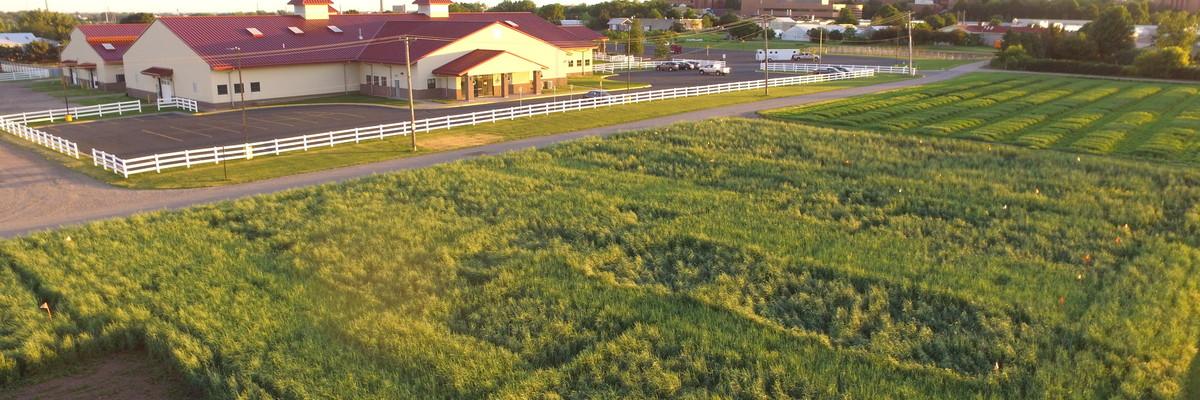
What is a cropping system? We use the phrase to describe the interactions among plants, soil, atmosphere, livestock and humans that are needed to generate agricultural outputs (food, feed, fuel and fiber). So how do we make cropping systems more sustainable? We collaborate with disciplinary scientists (e.g., plant breeders, pathologists, soil scientists), farmers, businesses, non-profit organizations, policy makers, and other key agricultural stakeholders to modify cropping systems to be more profitable, environmentally benign, and socially constructive.
Specifically, the Sustainable Cropping Systems Lab conducts field experiments at University Research and Outreach Centers and on farms to test new crops and agronomic practices that improve farmer wellbeing and environmental integrity. Our theory of change is rooted in diversifying and perennializing cropping systems. Below are links to research topics that we're pursuing.
- Kernza - The world's first commercially viable perennial grain crop
- Silphium - A novel perennial oilseed crop
- Alfalfa - A low-input perennial forage with many uses
- Native Plants - Agronomic opportunities from natural compounds to biofuels
- Alternative Crops - Exciting new crops in the early stages of development